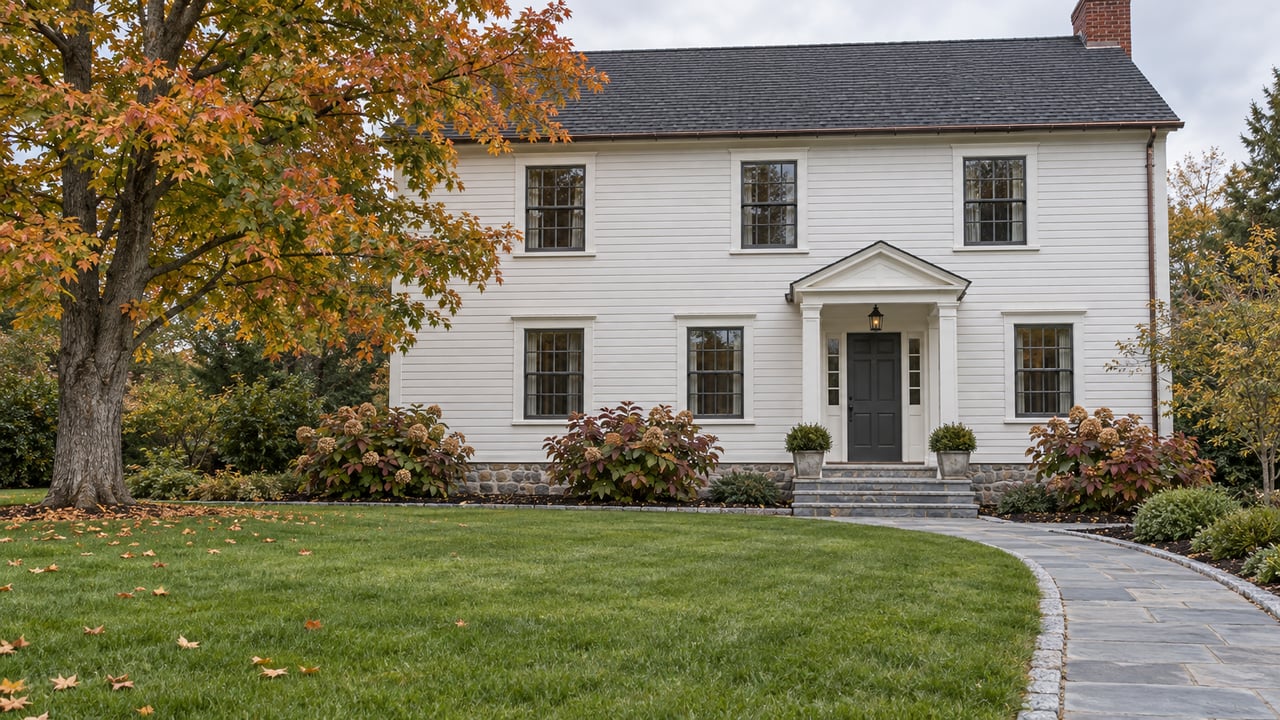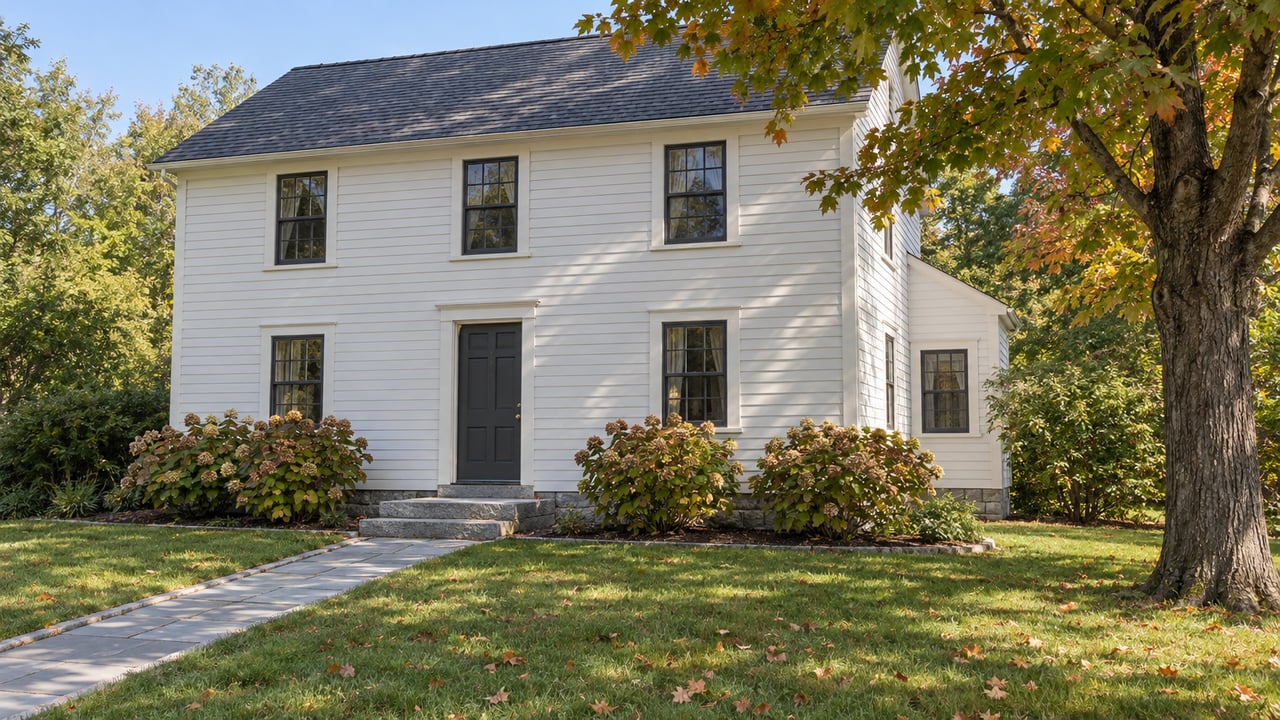
When a small, older Newton house sells to someone who plans to tear it down, the deal runs on a timetable set by the Newton Historical Commission. Any building at least 50 years old, including garages and sheds, goes through historical review before it can be demolished. A finding that the house is "preferably preserved" adds a 12-month delay, or 18 months for a property on the National Register. Builders plan for that delay, and the price they offer reflects it.
The city now has numbers on how often this happens. A Zoning & Planning Committee analysis presented on September 14, 2026 counted more than 400 Newton homes demolished or approved for demolition between 2021 and 2026. For anyone selling a modest pre-1960 house, or bidding against builders for one, the study changes the pricing question. On many lots, the buyer setting the number is valuing the land and the house that can legally be built on it.
The demolished-home price behaves like a floor
Councilor Pamela Wright presented the analysis, which she built with intern Sam Gelber from Assessor records, Inspectional Services demolition permits and real-estate listings. Fig City News reported that it covered 402 residential properties. Of those, 239 had a finished replacement home and 149 were still in progress.
The houses that came down were modest. For 2021 to 2026, 58% of them had under 2,000 square feet of living area, with a median of 1,866 square feet. Most were built before 1960, and the group included many capes, colonials and ranches. The city presentation puts the median price of a demolished home at about $1.22 million, against a median of about $3.6 million for the replacements. The replacements averaged 4,785 square feet, roughly 2.4 times the size of the houses they replaced, and one-third were over 5,000 square feet. Wright told the committee that many of the new houses are built to the maximum floor area ratio allowed.
A builder starts from what the finished house can sell for, works backward through construction costs and holding time, and arrives at what the lot is worth. The size and condition of the existing house matter much less in that math than lot area and zoning. The committee report records a councilor recalling owners who spent heavily renovating a house before selling it, only for developers to buy it and tear it down. When the likely buyer pays for land, the money that went into a new kitchen may not come back in the sale.
The data has limits. These figures describe the teardown group only. They are not compared against similar small houses that sold and stayed standing. A councilor asked for exactly that comparison, to find out whether developers pay a premium to buy quickly. Another asked for original sale dates and comparisons with similar properties. Wright described the work as a picture of broad trends. It is not a definitive city database of every demolition.
Same lot, before and after
These examples came from the presentation as Fig City News published them. Each one tracks a single parcel, so it shows how much value the lot carried. It does not show what a nearby house that stayed standing sold for.
| Address | Lot size | Original home | Replacement |
|---|---|---|---|
| 28 Dorothy Road, Newton Centre | 23,913 sq ft | 1953, 2,374 sq ft, sold for $1.65M | 2025, 5,706 sq ft, sold for $5.3M |
| 101 Alban Road, Waban | 19,647 sq ft | 1910, 2,180 sq ft, sold for $1.775M | 2025, 5,226 sq ft, listed at $7.25M |
| 36 Roland Street, Newton Highlands | 11,749 sq ft | 1950, 960 sq ft, sold for $1.19M | 2025, 5,603 sq ft, sold for $3.7M |
| 27-29 Indiana Terrace, Newton Upper Falls | 8,307 sq ft | 1906 two-family, 1,718 sq ft | Two condos totaling 4,484 sq ft, sold for $3.525M |
The Roland Street house shows the pattern most plainly. A 960-square-foot home on a lot under a third of an acre sold for $1.19 million. That price was for the lot.
Where it happens depends on the zoning
The study did not find one citywide pattern. The largest concentrations were in Oak Hill with 73 demolitions, Nonantum with 52, West Newton with 48, Oak Hill Park with 44, Waban with 39, Newton Centre with 33 and Newtonville with 17. By zoning district, SR2 led with 130, then MR1 with 115 and SR3 with 97.
Wright grouped them into three patterns:
- Luxury single-family replacements in the southern SR1 and SR2 districts.
- Modest-home replacements in West Newton and Oak Hill Park, zoned SR3.
- Multifamily conversions along the northern MR1 and MR2 corridors, like the Indiana Terrace two-family that became two condos.
A councilor added that Newton's local historic districts see relatively few demolitions. So the zoning district a house sits in tells you more about who might bid on it than the village name does. The lot's district shapes what a builder could put there, and that shapes what a builder could pay.
The review clock a builder prices in
On September 28, Chief Preservation Planner David Lewis and Senior Planner Amanda Wolfe walked the committee through how demolition review works in practice. The committee report lays out the sequence:
- Referral. Inspectional Services sends every demolition request to the Historical Commission to decide whether the property is historically significant.
- Significance screen. A request skips the Commission only if both preservation planners and the Commission Chair agree the building is not historically significant. Lewis said almost any home built before 1900 is considered historic.
- Decision deadline. The Commission has 60 days from submission to act.
- Delay. A "preferably preserved" finding brings the 12-month delay, or 18 months for a National Register property.
- Waiver. An owner can apply for a waiver four months into the delay. Staff said many waivers are granted, and the waiver process is the Commission's only chance to weigh in on the design of the replacement house.
A councilor noted that developers likely build these delays into their financial planning. Some wait out the full delay, and others apply for a waiver at four months. For a seller, this means the age of the house affects the deal. A 1953 ranch and an 1890s farmhouse on similar lots can follow different review paths, so builders face different holding costs on each. Staff also said the Commission has more say over the final design through a waiver than if the developer simply waits out the delay.
Recent rules limited the shape of new houses but not the incentive to build them
Newton has already tried limiting what replaces a teardown. The Newton Beacon reported that the City Council passed a Residential Façade Build-Out Ratio 18 to 5 in October 2025, effective March 1, 2026. It generally caps a new home's front elevation at 60% of lot frontage. Lots under 50 feet wide and additions under one and a half stories are exempt, and owners can seek a special permit for relief.
Wright told the committee that the façade ratio, retaining-wall height limits and measuring height from original grade have not reduced demolitions. She also said many of her examples predate the façade rule, and that builders could still fit the same volume on those lots. Six months is too short to test the façade rule properly. Still, the rule controls how wide the front of the house is, not how much floor area goes behind it.
State law has since pushed the other way. At the same September 14 meeting, Assistant City Solicitor Andrew Lee explained recent changes to Chapter 40A. Structures that are nonconforming because of lot size, frontage, lot coverage or FAR can now be extended or altered by right, as long as they meet current height, story and setback rules. Asked directly, Lee said an owner could tear down a house that doesn't conform on FAR and build a new one with more floor area without a Section 6 finding. The owner could not add units. The standard for zoning variances also changed from "substantial hardship" to "practical difficulty." Together, these changes leave builders more room on a teardown lot, not less.
The ideas on the table would change who gets to bid
At the September 28 session, councilors floated tools aimed at the sale itself, before any demolition permit. One councilor said other communities require homes of strong historic or architectural significance to be listed for sale for a set period, so that more buyers get a chance before a developer does. Another suggested looking at whether off-market sales to developers could be stopped. A third proposed a city list of significant homes. One councilor said that most homes designated historic still end up torn down. Several said zoning changes would also be needed.
None of these proposals has been adopted. The committee's agenda for Wednesday, October 14, 2026 lists items #291 on the demolition-delay ordinance, #292 on other municipalities' ordinances, #307 on possible amendments to preserve Newton homes and #308 on lowering the voting threshold for landmark designation.
One project shows the process playing out right now. At 1314 Washington Street in West Newton, Beacon Communities has proposed a 72-unit, all-affordable mixed-use building under the Village Center Overlay District and has asked for a demolition-delay waiver. Fig City News reported that after a September 24 hearing, the Historical Commission agreed to review a revised design at its October meeting. A landmark nomination for the site is scheduled for review on November 15.
Questions sellers and buyers are asking
Does demolition review cover only the house? No. Fig City News reported that review applies to any building or structure at least 50 years old, including garages and sheds.
Are listing-period or off-market limits in effect today? No. As of October 12, 2026, they are ideas councilors raised in committee discussion. None has been adopted as an ordinance.
Does the façade ratio apply to every lot? No. Lots under 50 feet wide and additions under one and a half stories are exempt, and owners can apply for a special permit to exceed the limit.
If you own a smaller, older house in Newton, its value may rest on two things: what someone will pay to live in it and what a builder will pay for the lot. Dan Demeo has spent years renovating homes and knows how the review clock works, and the Demeo Team can work through both values with you before you decide how to sell. Get a Free Home Valuation to see where your house falls.
This article is general information, not legal, tax or financial advice. Consult a qualified professional about your situation.